Locations




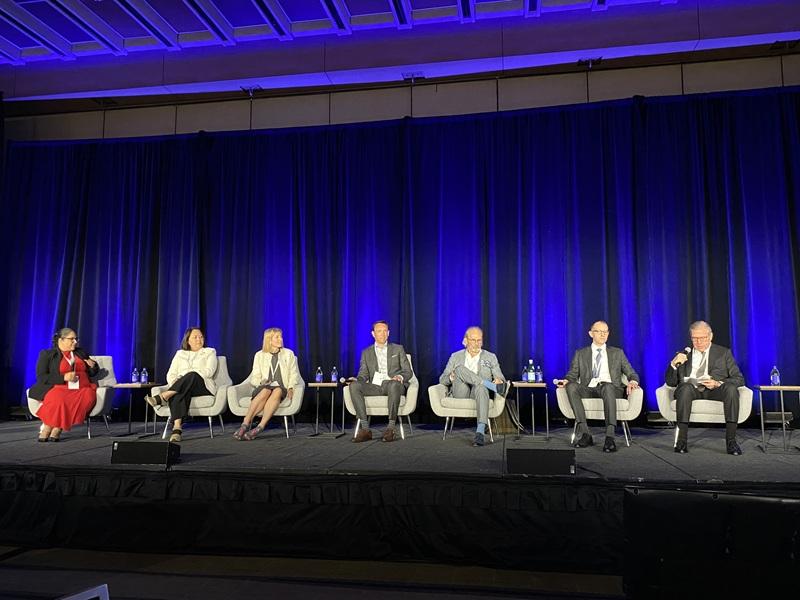
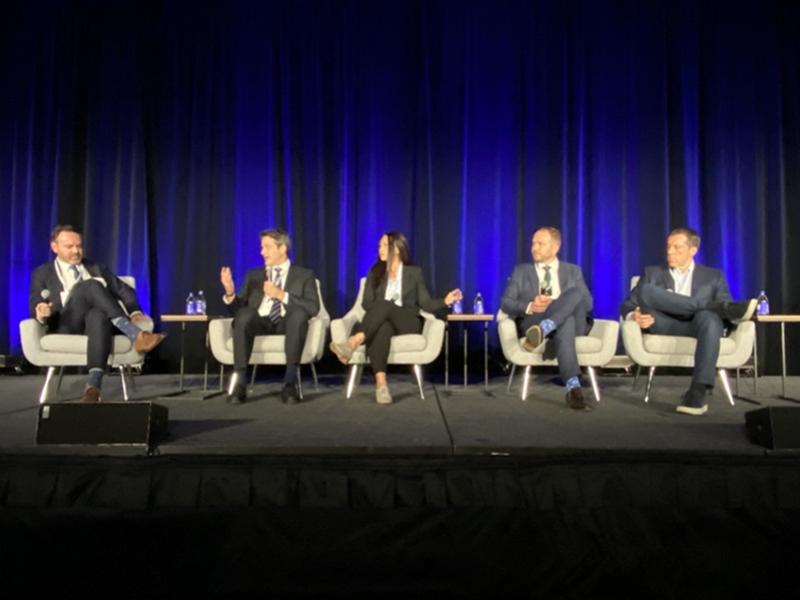
The Land & Development conference at the Metro Toronto Convention Centre closed with a discussion about the most significant challenges, trends, risks and opportunities for investors, owners and developers across Canada.
Quality office product has made a nice recovery of late and Oxford Properties vice-president of development Andrew O’Neil said his company has activated projects in Toronto, New York City and London, England over the last 12 months after securing major pre-lease commitments from high-quality occupiers.
O’Neil also cited a large purpose-built rental apartment development in the Toronto suburb of Scarborough that moved forward due to input from the Canada Mortgage and Housing Corporation.
“It depends on the opportunity and asset class, but there's often going to be a catalyst in this market to allow a project to move forward,” he said.
“If there's an opportunity to demonstrate that we've de-risked the opportunity, that’s what helps get projects moving forward,” O’Neill added later.
Banks and government incentives
Banks still want to lend to solidly established private developers, according to CBRE vice-chairman Mike Czestochowski.
“They don’t want to give it to the one-offs and the smaller players anymore,” he said. “They want to give it to the proven players.
“And I think, if anything, they're probably getting more money thrown at them than they were five years ago because there's a lot less competition for those traditional banks.”
Osmington Gerofsky Development Corporation is a Toronto-based multifamily residential rental developer and executive VP Laurie Payne said government involvement has created opportunities for land acquisition. The lowering or elimination of development charges is the next one she’s waiting for.
“There's huge opportunity in construction cost savings,” Payne continued. “We're getting the best trades and the best products and there's an opportunity to move quickly.
“If you can get there, I think the opportunities are significant. It's getting to the start line that's really the challenge.”
Saskatchewan and Alberta
Dream Unlimited executive VP of real estate finance and development Tsering Yangki said some government programs to promote residential development that are available in Toronto and Ontario don’t exist in Saskatchewan and Alberta, where the company previously purchased almost 8,500 acres of land at prices much lower than today's would be in Saskatoon, Regina, Calgary and Edmonton.
While they may have been tough markets a few years ago, Dream is now experiencing success and is positioned well for the future due to its conviction in those cities combined with their population growth, strong economies, infrastructure investment, and quick approvals, financing and lease-ups.
“If you have the capital and you have projects and it makes sense, get moving,” Yangki suggested.
Population growth is important
“Population growth is the lifeblood of real estate development,” said Northcrest Developments CEO Derek Goring of the spike and crash in Canadian immigration numbers this decade. “If we don't see stable population growth in the next few years, that's going to be a major problem.”
“A lot is riding on our federal government's ability to do some deals that bring new capital and new people to this country and make it a very attractive place to move to,” said O’Neil. “In some ways, a reset in residential pricing makes this country a bit more attractive for new arrivals.”
“In order for us to recover on the residential side, we've got to get back to stability where we don't have huge volumes of inventory coming in big chunks and where we have a normal pace of absorption and construction,” said Payne.
Goring added that midrise multi-residential developments are easier to get done these days than highrise towers and that partnerships are more important than ever.
“There's no one solution that makes a project work,” said Goring.
“It's how can you stack a whole bunch of things together, and that's challenging because the timing of getting everyone to coordinate means more people and more stakeholders. It’s hard but it's necessary.”
Potential acquisition and development opportunities
Fengate Asset Management senior advisor for real estate development and portfolio management Paul Finkbeiner said there may be acquisition opportunities in Toronto’s depressed condominium market as well as with certain office assets, but he’s unsure how many companies will have the conviction to take on the potential risks that come with those investments.
Goring suggested following the mining and defence industries because those two sectors are spending money and there should be trickle-down development opportunities where they’re active. He cited Timmins, Ont. as a good example of a city that previously wasn’t on most people’s radar but probably should be now.
“It's not the scale of opportunity that our shareholder is probably going to pursue, but an entrepreneurial opportunity is going to exist in those places,” said Goring.
Yangki said there could be opportunities in Canada’s northern territories that developers could unlock.
“Developers are fundamentally curious problem-solvers, so when you're faced with less than optimal circumstances you have to roll up your sleeves and figure it out,” concluded O’Neil.
“We have to remain optimistic. I think a fundamental to being in this business is to believe in the future.”




 Industry Events
 Locations