


 Locations





A clear shift is underway in how data centre projects are being evaluated across Canada.
Demand is no longer the question. Across industries including banking, logistics, health care and the public sector, organizations are scaling their digital infrastructure at pace. Artificial intelligence is accelerating that shift, driving higher-density computing requirements and sustained demand for resilient, high-performance facilities.
What is changing is how projects move forward.
The conversation is increasingly focused not just on-site selection or building availability, but on how well a property aligns with infrastructure, particularly power, and long-term operational requirements. Increasingly, that alignment is where projects succeed or quietly fall apart.
Infrastructure is driving decision-making
Historically, real estate decisions have been driven by location. In the data centre space, that equation is evolving.
Across key Canadian markets such as Toronto and Montreal, access to power is becoming a central factor in determining project feasibility, timelines and overall strategy. These remain highly attractive markets, supported by connectivity, demand and established ecosystems.
However, one of the most common gaps in early-stage planning is the assumption that power availability equates to project readiness.
In practice, power risk is far more complex. Capacity may be identified or even allocated, but not fully permitted, sequenced or deliverable within required timelines. Substations that appear viable on paper may not meet redundancy or resilience requirements, and utility upgrade timelines can extend well beyond acquisition assumptions.
This is where many projects begin to diverge from initial expectations.
Power decisions are no longer purely real estate considerations. They are engineering and regulatory challenges that must be addressed early in the development process.
Leasing reflects operational priorities
Data centres differ from traditional asset classes in one key way: tenants are leasing power as much as they are leasing space.
Lease structures are built around power capacity, with space, connectivity and operational services layered in. Service-level agreements define uptime, maintenance and performance standards, and these requirements directly influence how facilities are designed and operated.
Data centres are classified in tiers according to a standard established by Uptime Institute:
- Tier 1: Basic capacity with a single path for power and cooling. Uptime: 99.671 per cent (28.8 hours of downtime annually). Suitable for small businesses with noncritical applications.
- Tier 2: Redundant capacity components with multiple power and cooling paths (one active). Uptime: 99.741 per cent (22 hours of downtime annually). Suitable for small- to medium-sized businesses.
- Tier 3: Concurrently maintainable with multiple active power and cooling paths. Uptime: 99.982 per cent (1.6 hours of downtime annually). Ideal for larger businesses with high availability needs.
- Tier 4: Fault-tolerant with fully redundant power and cooling paths. Uptime: 99.995 per cent (26.3 minutes of downtime annually). Suitable for mission-critical operations.
Most projects are designed to meet Tier 3 or Tier 4 standards, reflecting the need for continuous operations and minimal disruption. As a result, mechanical and electrical systems are often the primary drivers of both cost and performance.
Conversions require alignment, not just availability
Interest in converting underutilized buildings into data centres continues to grow, particularly as certain office assets face ongoing challenges.
While many buildings appear viable at a high level, feasibility often breaks down at the engineering level.
Common constraints include insufficient floor loading to support high-density equipment, cooling pathways that reduce usable space, and building envelope limitations incompatible with containment strategies. These issues can impact both performance and financial viability.
As a result, many “convertible” buildings do not ultimately meet the requirements for data centre use, regardless of market demand.
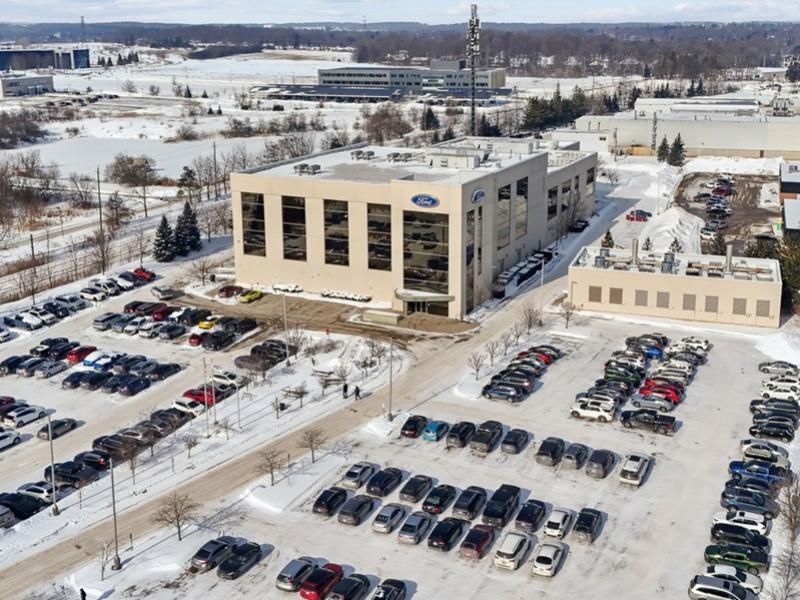
A recent engagement illustrates how these factors come together. A real estate investment group engaged Partner to assess the feasibility of converting a multi-building business park in a major metropolitan area totalling approximately 400,000 square feet.
The assessment evaluated network connectivity, power capacity, market conditions, zoning and scalability, along with overall infrastructure readiness and the ability to support future expansion.
The property was found to be well-positioned for data centre use, supported by access to multiple fibre providers, strong underlying power infrastructure and minimal environmental risk. Opportunities were also identified to enhance performance through targeted upgrades to electrical and cooling systems.
From an investment standpoint, the results were significant. The projected increase in property value was approximately 400 per cent, with conversion costs estimated at 22 per cent of the existing value.
However, that outcome was only achievable because key risks were identified and addressed early in the process.
Technical due diligence is becoming more critical
As the market evolves, there is a growing emphasis on technical due diligence, particularly as it relates to environmental and infrastructure risk.
Environmental factors are often viewed through a compliance lens, but in practice they can have direct implications for project timelines and capital costs.
Floodplain exposure, for example, may influence not only insurance considerations but also operational resilience and equipment placement. Soil conditions, groundwater and legacy contamination can limit the feasibility of backup power systems or require significant remediation. In some cases, environmental or municipal overlays can extend pre-construction timelines by 12 to 36 months.
These risks are not always fully captured in early-stage underwriting but can materially impact delivery timelines and overall project feasibility.
Mechanical, electrical and plumbing assessments remain central to evaluating capacity and upgrading requirements, but increasingly they must be considered alongside environmental and regulatory constraints.
Resilience is a core requirement
Resilience is a fundamental requirement in data centre development.
From building envelope performance to structural capacity and climate resilience, facilities must be designed to support continuous operations under a wide range of conditions. In Canada, this includes evaluating exposure to extreme weather, temperature variation and, in some regions, seismic risk.
Mitigation strategies such as system redundancy, structural reinforcement and site-specific design adjustments can significantly enhance long-term reliability.
A more integrated approach
Canada’s data centre market continues to present significant opportunities, supported by strong demand, clean energy advantages and growing investment.
At the same time, the nature of the asset class is evolving. Data centres are increasingly functioning as infrastructure assets rather than traditional real estate investments.
Capital allocation, redundancy, life-cycle performance and engineering foresight are becoming more important than traditional considerations such as frontage or layout.
As a result, successful projects align real estate fundamentals with infrastructure readiness, technical requirements and long-term operational performance.
With the right planning and risk identification early in the process, data centre development and conversion can deliver both operational reliability and strong investment outcomes.




 Industry Events
 Locations
