Locations



RFA Financial has begun selling real estate assets as part of a strategy to redeploy capital into its higher-growth financial services and banking operations, the company’s chief executive told RENX.
The initial dispositions – including two properties in Saskatchewan – kick off a broader plan to unlock value tied up in its diversified real estate portfolio and shift asset allocation toward mortgage lending and other financial activities.
"Unlocking value within our real estate portfolio and recycling capital into higher-return financial services investments is a key component of our strategy," said Ben Rodney, president and CEO of RFA. "We are pleased with the significant progress achieved in a short period...."
The company announced $60.4 million in property sales this week, $86.8 million of unconditional sale agreements, approximately $196.6 million of conditional sale agreements, and marketing for a further 1.3 million square feet of real estate dispositions.
The RFA transactions, and its history
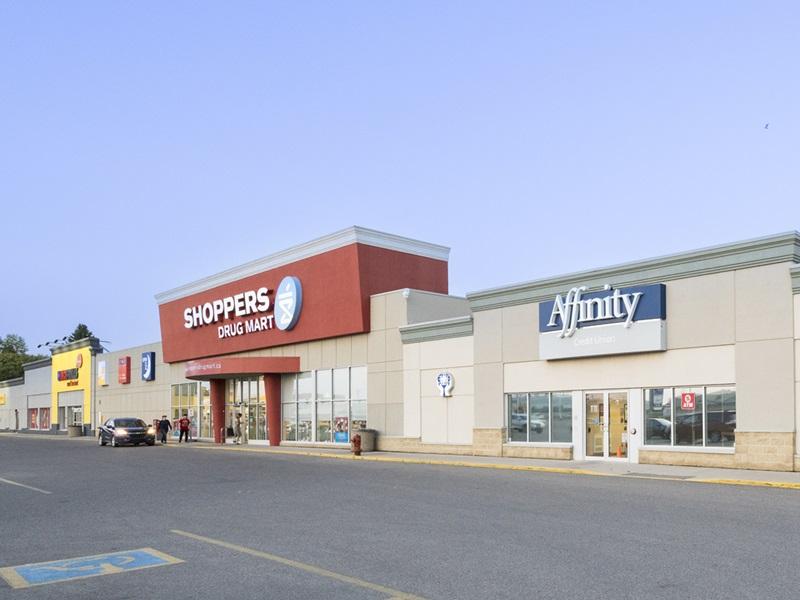
The completed transactions include the sale of RFA's 90 per cent interest in Corridor Park, a parcel of development land in Texas, for $15.4 million, along with the sale of Canarama Mall and Circle West, two retail properties in Saskatchewan for a combined $45 million. The transactions closed on Feb. 3 and Mar. 13, respectively.
The two Saskatoon retail properties were purchased by Winnipeg-based LS Properties.
The company also has $86.8 million in unconditional sale contracts in place, including a Canadian office property and parkade, and a U.S. industrial asset. Subject to conditions, these transactions are expected to close in 2026.
RFA Capital was founded in 1996 as a Canadian-owned real estate investment and asset management firm. In 2018, RFA Capital expanded into residential lending with the goal of becoming a top broker channel lender. The acquisition of Street Capital Bank in 2019 accelerated RFA’s expansion in both the prime and alternative lending segments.
In 2024, RFA Capital expanded its global footprint, acquiring Cayman Islands-based Five Continents Financial Ltd. On Feb. 1, RFA Capital Inc. and Artis REIT combined to form RFA Financial, a public company that combines a growing Canadian bank and mortgage finance company with a proven real estate platform.
“We’ve done a number of things in the financial services space. The first transactions we did were buying distressed real estate and mortgages. Our longtime partner in the business has been, and continues to be, the Joyce family, so Tim Hortons,” Rodney explained.
“We were the first buyers of non-investment-grade bonds in the commercial mortgage-backed securities space. We were the Canadian buyer at the time on the financial services side with commercial real estate and mortgages. Post-credit crisis, we controlled north of 80 to 85 per cent of the CMBS (Commercial Mortgage-Backed Security) market because we bought up a lot of U.S. buyers of Canadian paper and that product.
“In the second iteration, we did a number of things in terms of building up RFA Mortgage Corp. We ended up acquiring Street Capital Bank of Canada in 2018/2019. We’ve done a lot of financing and funding behind the scenes with all the major banks and groups.”
RFA's real estate and mortgage strategy

The company has been focused on commercial real estate, residential real estate – both debt and equity – and mortgage product across the spectrum.
“I had a really interesting position over the last couple of years where RFA as a platform had gone from originating in the residential mortgage space at a few hundred million (dollars), when we started, to north of five billion," Rodney said. "The bank, when we bought Street Capital Bank of Canada, had a few hundred million dollars on the balance sheet, and we’re cresting three billion now."
Before Artis came on board, Rodney said he would have classified it as a broken business model
“It was a classic problem of great people and good real estate but a massive valuation disconnect between the two," Rodney said. "One of the things I talked to everybody about was that the Artis platform has size and scale that can be better utilized. We can unlock trapped value by combining the businesses and rotating asset sales from the old Artis platform into capital toward the RFA side.
“Then we can utilize bank leverage and we can utilize higher return on that capital on a combined basis. That’s really what put together the reverse takeover of Artis, where RFA went public and the old Artis platform is now a subsidiary under RFA Asset Management."
Part of the strategy is to sell some assets to "repurpose and repatriate that capital into the financial services and banking sector,” he added.
The RFA real estate portfolio includes Canadian and U.S. retail, industrial and office valued at about $2.6 billion.
More transactions to come
RFA said, in aggregate, the sale price for the closed and unconditional transactions represents a 4.1 per cent increase over the properties' IFRS values at Dec. 31, 2025.
RFA has a further one million square feet of office and industrial assets under contract for a total of approximately $196.6 million. BMO Capital Markets is leading the process to sell the additional 1.3 million square feet of industrial assets.
“You can anticipate we’ll see further asset sales and further forms of liquidity as it relates to the underlying real estate,” Rodney said.
“The value disconnect between public and private valuations in Artis was so large, and this became a viable strategy to unlock that value in seeing a higher total return proposition... This is really about asset allocation and the movement of capital to unlock trapped value, within a business model and a structure, in a sector that is trading at significant discounts to the underlying value, the intrinsic value, of the entity.”


 Industry Events
 Locations