
 Locations







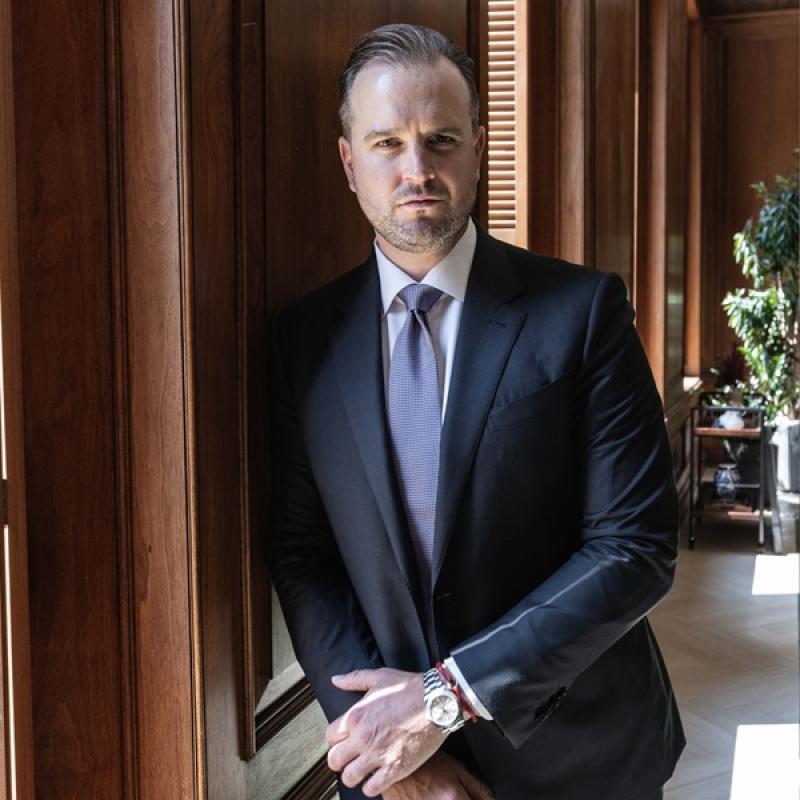
Toronto-based Cameron Stephens Mortgage Capital Ltd. has named longtime executive Steve Cameron as president and chief executive officer, formalizing a leadership transition more than a decade in the making as the commercial real estate lender accelerates expansion in Western Canada.
Co-founder Scott Cameron will move into the role of executive chairman, remaining involved in credit oversight and key investor relationships at the firm he helped build into a $3.6-billion asset manager.
The leadership change comes as the company deepens its push into Alberta and British Columbia, highlighted by the recent appointment of Calgary-based Aaron Unger as senior vice-president to lead regional growth.
The firm said Unger, a former National Bank of Canada executive, will oversee business development, credit and operations as Cameron Stephens scales its presence in Western Canada, where it currently manages about $550 million in assets and is targeting $2 billion within three years.
New CEO aims to build national platform
In an interview, Steve Cameron said the Western expansion reflects a broader strategy to build a national platform, with renewed investment in Calgary after earlier efforts in the region fell short. He pointed to strong population growth, relative housing affordability and tighter bank lending conditions as key drivers of opportunity, adding the firm has already increased deal activity in Alberta sharply this year and plans to open a Calgary office to serve as a regional hub.
“We’ve built a strong brand and market share in Southern Ontario, but my vision is to be a national, potentially international firm. That means being present in major markets across Canada — Calgary, Edmonton, Vancouver. We’re also looking at Victoria, Ottawa, Halifax and potentially Quebec,” Cameron said.
“Western Canada has been a key focus. It’s a strong region with a lot of business and immigration. Vancouver, Calgary, and Edmonton are great cities for lending and development.
“We first went to Calgary in 2015. We hired someone, but shortly after, oil prices dropped dramatically, and we struggled. We didn’t invest properly. We hired one semi-retired individual and didn’t build a team.”
In 2020, the company shifted focus to Vancouver, hired someone in 2021, and built a team of five there. Meanwhile, Alberta was neglected, he explained.
Team building in major cities
“Now we’re focused on building proper offices in major cities, hiring leaders, building teams, and putting infrastructure in place. Being alone in a market is difficult,” said Cameron.
“Hiring Aaron Unger signals to the market that we’re serious about Calgary, Alberta and Western Canada. We’re investing properly and building a real business there.”
Cameron said the potential in the West is huge.
“The market is shifting, especially in the alternative lending space. Canadian banks are very conservative, which creates opportunities for non-bank lenders like us,” he said.
“As banks stay cautious, firms like ours can step in and grow. Alberta is one of the best housing markets in Canada right now. Vancouver and Toronto have been hit hard due to highrise condo exposure, but Alberta has strong development and immigration.
“It’s more affordable, with a great lifestyle. Calgary, in particular, is very attractive right now. There’s a lot of opportunity, and we’re excited to capture market share. We’ve done more business in Alberta this year than in the last five years combined.”
Cameron said the company recently financed a large office building in Edmonton, did an industrial land development deal outside Edmonton and a condo development in Canmore.
Cameron Stephens history
Cameron Stephens was founded in 2004. It was co-founded by Scott Cameron and George Frankfort. It launched Cameron Stephens Equity Capital in 2021, and grew to just under $3.6 billion in assets under administration, more than doubling in size since 2021.
The firm offers institutional and private investors strategic opportunities to invest in commercial real estate with consistent, risk-adjusted returns. Cameron Stephens Mortgage Capital (CSMC) provides mortgage solutions for developers across Canada, while Cameron Stephens Equity Capital (CSEC) provides equity partnership opportunities for high-quality, strategically positioned developments across the country.
“What George and I set out to build in 2004 was a firm grounded in discipline, integrity and genuine partnership. That commitment lives in everything this team does today. Steve has been at the heart of this firm’s growth for 15 years, and watching him lead, I have every confidence in where Cameron Stephens is headed. I look forward to continuing to serve our investors and contributing to what comes next,” said Scott Cameron in a statement.
Steve Cameron joined the firm about 15 years ago after university.
“Historically, in the beginning, we were a lowrise residential development finance company. We did a lot of developer financing. Someone would buy farmland, rezone it to low-density residential, subdivide it into lots, and build houses,” he said.
“That was the core business early on, land loans, lot servicing loans and construction loans. It was predominantly smaller developers. Our pricing was more expensive, and we were often seen as a lender of last resort.
Changing scope
“When I joined, we still did a lot of that. The average loan size was about $5 million. But we also had institutional relationships where we managed money on behalf of non-banks, tier-two banks, pension funds, credit unions, trust companies and life companies.
“My vision was to move away from smaller, higher-risk loans for unqualified borrowers and move up the spectrum in quality, risk, and loan size, working with more institutional-grade developers across Canada.”
He said the company has transformed from a small boutique mortgage lender into a larger institutional asset management firm. Historically, about 80 per cent of its business was land development and construction, and 20 per cent was other. Now it’s shifted to a more balanced, diversified portfolio.
“We focus on commercial, industrial, self-storage, long-term care, student rental, some hospitality, retail and commercial bridge lending, the full gamut of commercial real estate lending.”




 Industry Events
 Locations