Locations
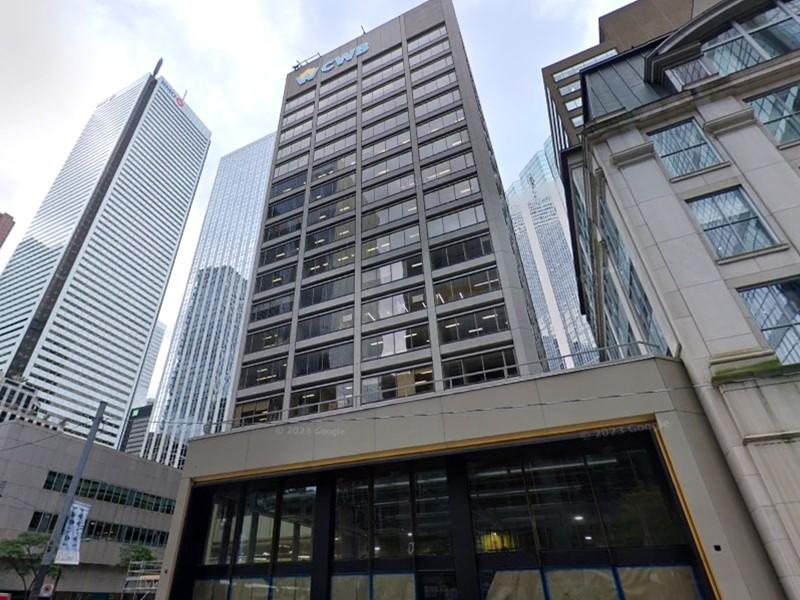




Just before the holidays, Spear Street Capital closed on its acquisition of 141 Adelaide St. W. in downtown Toronto, one of the larger office transactions in the GTA in 2025 and the latest acquisition in Canada by the San Francisco-based firm.
Located about three blocks from Union Station, the tower at was constructed in 1973, rises 18 storeys, and houses 187,987 square feet of office space. The building has an occupancy rate of 92.2 per cent, is anchored by Canadian Western Bank (which was absorbed by National Bank last year), and has a weighted average lease term of 4.8 years.
The BOMA BEST Gold-certified property was listed for sale in August 2025 by David Tweedie, Keith Chan, and Ryan Marino of RBC Capital Markets Realty Inc. on behalf of Hydro-Québec pension plan and was acquired by Spear Street for $95,250,000.
The price translates to $507 per sq. ft.
It is believed to be the third-largest office transaction in the GTA in 2025. The largest transaction was Desjardins’ acquisition of 70 York St. from KingSett Capital for $134.6 million ($638 per sq. ft.) in November, while the second was Infrastructure Ontario’s acquisition of 438 University Ave. from Dream Office REIT for $105.6 million ($327 per sq. ft.) last January.
Spear Street Capital
Spear Street Capital was founded in 2001 in San Francisco by John S. Grassi after leaving the Shorenstein Company as vice chairman. In an interview with RENX, Grassi said that the company was founded in the wake of the dot-com bubble bursting.
“I wanted to start my own thing and I thought it was a glaring opportunity,” he said. “I wanted to do two things. One was to sit at the knee of the big guys like Cisco, Microsoft, EMC — companies that were probably going to survive the tech wreck — who were shedding real estate assets as fast as they could in order to get lean and mean and right the ship.
"I also wanted to pick through the wreckage of the guys going out of business altogether.”
Spear Street Capital — whose office in San Francisco resides in One Market Plaza, a building that fronts Spear Street — did just that, putting together a portfolio of office assets in tech hubs like Seattle and San Francisco.
After things turned around faster than many had anticipated, the firm bought a number of assets in Austin, Texas in 2004 and 2005, where big companies like Apple and Google were going. The company continued expanding and now has high-profile assets in about 15 U.S. markets, as well as a handful of assets in Ireland and Canada.
“Along the way, we diverted substantially from tech and what we would tell people is ‘Hey look, we didn’t invest in tech because we like the gadgets, we invested in it 'cause that was what the boom and the bust was,’” Grassi said. “We became probably the largest U.S. acquirer of excess corporate real estate — not just tech companies, but also oil and gas companies in 2015 and 2016.
"We also acquired some from the big U.S. newspaper companies, who used to have great properties in the centre of major cities but were all going away.
“Our attitude is if you can buy an asset right, you can either hold it for a disposition or refinance it, or if you can just continue to generate cash flow, then that’s fine,” he added. “We don’t have a set timeframe on ownership. Generally our ownership is around the five- to seven-year range, maybe five to eight, so we can afford to be patient. Not as patient as maybe the major institutions, but we don’t need immediate results.”
An opportunistic buyer
Spear Street’s portfolio is focused entirely on “distinctive” office assets — it sometimes acquires other asset types as part of a package, but typically sells them off quickly — and to only build from time to time.
Grassi characterizes Spear Street as very much an opportunistic buyer. He said the firm does not operate with particular markets in mind, but instead looks at specific situations, such as assets where an owner just doesn’t want it anymore, or there’s something wrong with the capital structure, or a problem with tenancy.
That led it to Canada.
“As we expanded in the U.S., we noticed in Canada around 2014 that Blackberry was at death’s door and they needed $300 million or so to survive, so we bought the entire Blackberry real estate portfolio — roughly 3 million square feet, 20-something assets across Southern Ontario, from Ottawa out to Kitchener and Waterloo — and held those assets for a number of years, then sold them all. I think the last one we sold was a couple of years ago.”
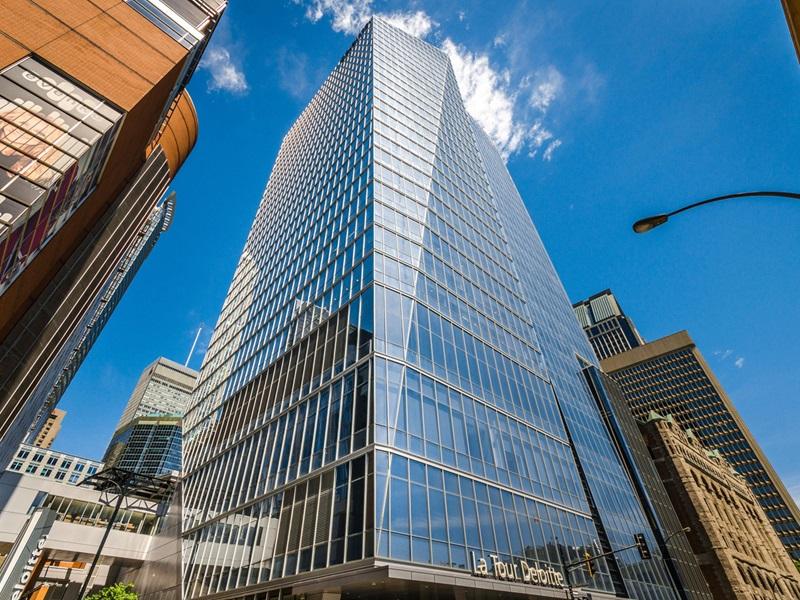
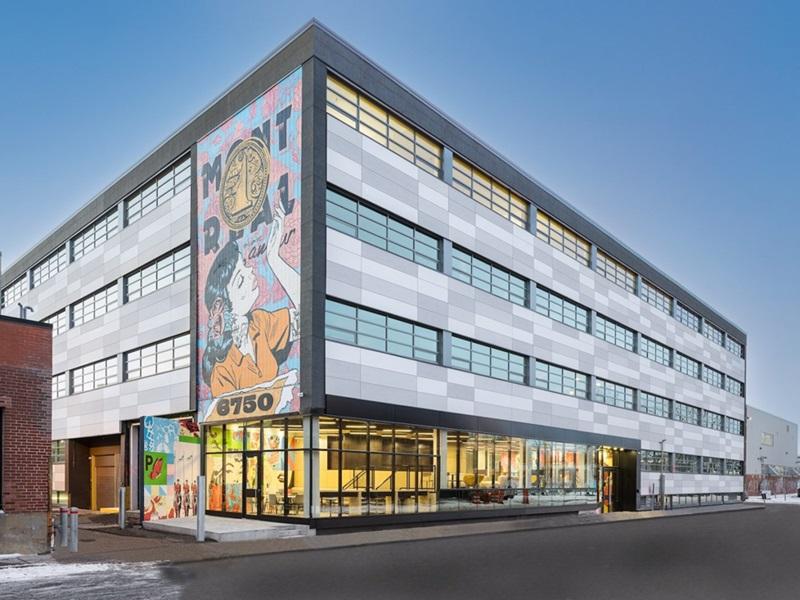
Today, Spear Street, which has a team of around 30 and a second office in New York, has one asset in each of Toronto (141 Adelaide), Montreal (O-Mile Ex), Calgary (The District At Beltline), plus three in Vancouver (510 West Hastings, 929 Granville Street, and M2), with Canada representing around 20 per cent to 25 per cent of its portfolio. Grassi said Spear Street also has a land site in Mississauga “ripe for data centre development.”
"Positive signs" in Canada's office sector
“The positive signs are demand is increasing,” Grassi said, speaking on the Canadian office market.
“Interest rates are very beneficial now — much better than the U.S. I would say debt availability is better than it was a year or two ago. So all those things are very positive. How will Canada do from an overall economic standpoint? My hope would be that there’s continued economic growth in Canada so all these other elements will combine with that to create a very favourable situation.
“There’s a whole combination of things that combined together to make office very, very difficult and owning an office very perilous,” he added. “Right now, let’s face it, a lot of Canadian institutions just aren’t active in real estate — certainly the office side.
"Until they return, I think the office market will be missing a very big source of demand for assets. I assume that will change at some point.... People have been very negative about office and I think that’s starting to change.”


 Industry Events
 Locations