
 Locations



Across the country, extreme rainfall, flooding, heat waves, wildfire smoke and severe wind events are exposing weaknesses in many existing buildings.
In residential projects, those pressures show up in practical ways: overheating suites, vulnerable ground floors and parkades, flooding, strain on mechanical systems, insurance exposure and disruption for residents.
Climate resilience is no longer only about protecting a building from a single event. It is about how a property will perform over time as weather patterns become less predictable, and how owners can reduce physical risk and operational disruption while keeping energy and carbon goals in view.
Designing for tomorrow’s weather, not yesterday’s
Many buildings were designed around historical climate data. Codes and standard weather files have traditionally reflected past conditions, while owners now need to think about future ones.
For residential buildings, that raises practical questions early in planning and design. Is the site exposed to flooding or higher wind pressures? Will glazing and shading strategies still support occupant comfort during prolonged summer heat? Are backup power, drainage and roof assemblies robust enough for more frequent extreme events?
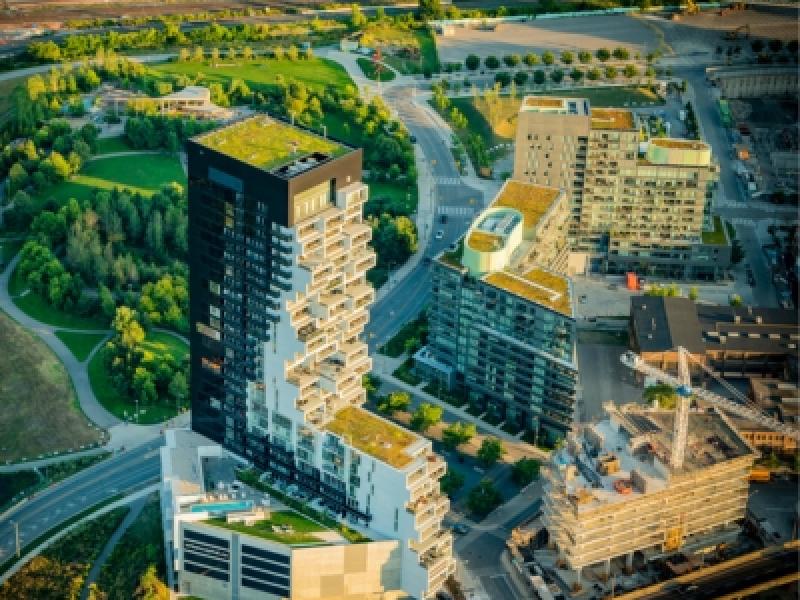
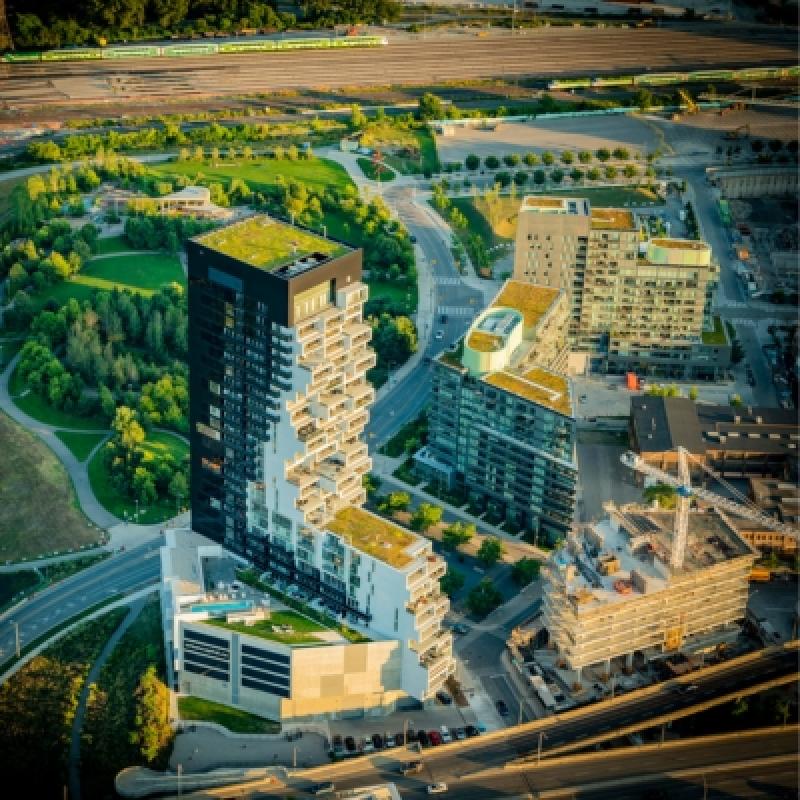
Forward-looking climate data can help teams assess those risks earlier and decide what level of adaptation is warranted over the life of the asset. In multi-unit residential buildings, even a short service interruption can affect hundreds of residents at once. At River City Phase 3 in Toronto, the building’s floodplain platform strategy shows how site-specific flood risk can shape design decisions from the outset.
Why the enclosure and structure matter so much
When buildings perform poorly during extreme events, the weak points are often familiar: water ingress, accelerated deterioration, thermal stress, reduced occupant comfort, and rising repair costs. That is why resilience often starts with the fundamentals: structure, enclosure and site response.
For apartment and condo buildings, enclosure performance is especially important. Better control of water, air and heat flow can reduce the risk of wind-driven rain penetration, condensation, corrosion, mould, and overheating allowing the building to withstand more extreme events. Robust systems alone do not guarantee performance; attention to detail during design and construction is crucial to getting a full resilience enclosure.
Structural choices matter too. In flood-prone areas, elevating critical spaces, protecting below-grade levels, or reconsidering where essential equipment is located can materially reduce vulnerability. In high-wind environments, the interaction between structure, cladding and connections deserves close attention. On tall residential projects such as Forma, structural strategies that address wind and seismic effects are also part of the broader resilience conversation.
For existing residential towers, resilience planning often begins with assessment of how the site and building now need to respond to a new reality. Owners do not necessarily need to rebuild from scratch, but they do need a clear understanding of where the current building is vulnerable and which upgrades will reduce risk most effectively while aligning any upgrades with the existing capital plan to minimize costs and long-term sunken costs.
Heat is becoming a residential building issue
Heat resilience is moving up the agenda for residential owners. In many parts of Canada, summer overheating was once treated as secondary to winter heating demand. That balance is changing and is reflected in the updated National Building Code climate tables.
Future-weather modelling has shown that while heating loads may decline, unmet cooling hours can rise sharply if buildings are not prepared. In residential settings, that is not just an energy issue. It is also a health, comfort, and liability issue.
Passive and active measures need to work together. Glazing selection, shading, orientation, insulation levels and airtightness all influence how much heat enters and remains in a building. Mechanical systems then need to be sized and configured for more frequent and longer-lasting hot periods. Ventilation strategies also matter, particularly when wildfire smoke affects outdoor air quality.
For owners planning capital work, the larger lesson is that climate resilience and resident comfort are increasingly linked and our solutions should reflect this in practice.
Resilience and decarbonization should not compete
A common mistake is to treat resilience and decarbonization as separate agendas. In practice, they are closely related.
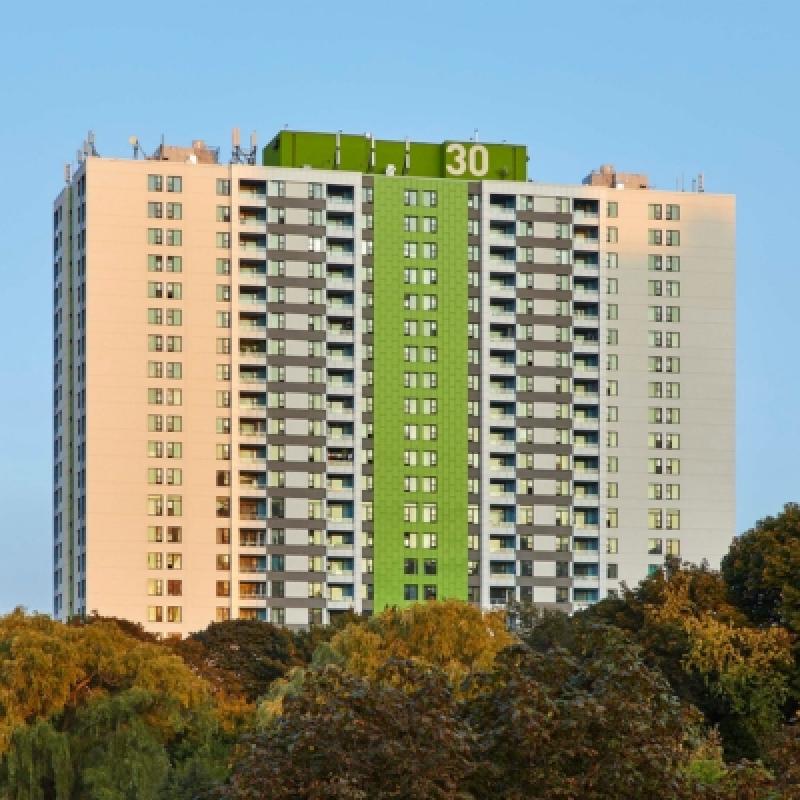
For residential projects, some of the same decisions that improve durability and climate readiness can also improve energy performance and reduce emissions. Better enclosure performance, attention to airtightness, reduced thermal bridging, right-sized systems and efficient electrified heating and cooling can support both objectives. That kind of integrated envelope renewal can be seen at 30-40 Teesdale Place Renewal, where the scope included replacement of exterior windows and doors, recladding of opaque walls and wholesale roof replacement.
The vast majority of buildings that need to be safer, cooler, and more efficient by 2050 are already standing. Owners will increasingly need upgrade plans that address resilience, emissions, lifecycle cost and resident disruption in a coordinated way.
The retrofit conversation is getting more urgent
For existing residential stock, the question is no longer whether retrofit work is needed, but how quickly and strategically it can happen. Recent oil price increases show the fragility of relying on long energy supply chains and refocus attention on direct actions we can control.
Many apartment and condo buildings were developed for a different climate risk profile than the one owners are now facing. Some are dealing with aging envelopes, limited cooling capacity, below-grade vulnerability or deferred maintenance that compounds exposure during extreme weather.
That is why prioritization matters. Not every property needs the same intervention, and not every owner can undertake deep retrofits immediately. But a thorough review of exposure, consequence and upgrade timing can help identify where to focus first.
For condo corporations, this lens is increasingly relevant to reserve fund decisions. For rental owners, it is becoming part of asset preservation and operational continuity.
A broader lens on residential resilience
The real estate sector has spent years focused on energy efficiency, lowering carbon, and affordability. Climate resilience now needs to sit alongside those priorities, especially in housing.
In apartment and condo buildings, resilience is ultimately about continuity: reducing disruption and improving long-term performance. The buildings being designed, repaired and renewed today will operate for decades. The more they are aligned with future conditions, the better positioned owners and communities will be to manage what comes next.



 Industry Events
 Locations