
 Locations





Harrison Street Asset Management, a major provider of off-campus student housing, wants to add more units to its Canadian portfolio despite the ongoing reduction of international students here.
Canada’s 15-19 age cohort is still expected to grow for the next five to ten years, supporting growing domestic demand for university education, said Mike Gordon, global chief investment officer, real estate, with the company that has headquarters in Chicago, London and Toronto.
He said there will be demand centred around Canada’s top-20 universities.
Canada’s top schools are facing a shortage of quality, well-located and modern student housing, Gordon said.
Harrison Street estimates there is only one purpose-built unit for every six full-time enrolled students attending the country's top-20 schools. The provision of student housing in the U.K. and the U.S. is about double the rate in Canada, according to the company and other sources.
"Canada should absolutely add more purpose-built housing, more institutional capital (and) deeper operating platforms," Gordon said. "We're going to see greater collaboration between universities and private capital, because housing increasingly affects enrolment, recruitment, retention (and) the overall student experience."
International student enrolment continues to drop

Meanwhile, demand for housing from international students will likely continue to drop. International student enrolment in Canada fell by 26 per cent for last school year, according to Statistics Canada. That followed a four per cent drop for the school year prior.
That trend is expected to continue into this school year.
Asked about the drop in international students, Gordon said they take that shift "very seriously."
"International students have been an important contributor to Canadian enrolment growth, and it would be a mistake to pretend that a significant policy change doesn't matter," Gordon said.
The impact, though, hasn't been felt equally across all Canadian schools with the top institutions still competing for the best and brightest students domestically and internationally.
He said these top schools have deep applicant pools, durable academic brands and have been experiencing roughly two per cent enrolment growth annually for the last 20 years.
In B.C., schools such as Simon Fraser University (SFU) and University of British Columbia (UBC) have remarkably small inventories of near-campus, purpose-built student housing, he said. "We're dealing with very undersupplied markets."
It all adds up to Harrison Street seeing long-term opportunity in the student housing market in Canada.
New homes near SFU coming soon for Harrison Street
The company develops its own student housing buildings and also acquires them, Gordon said.
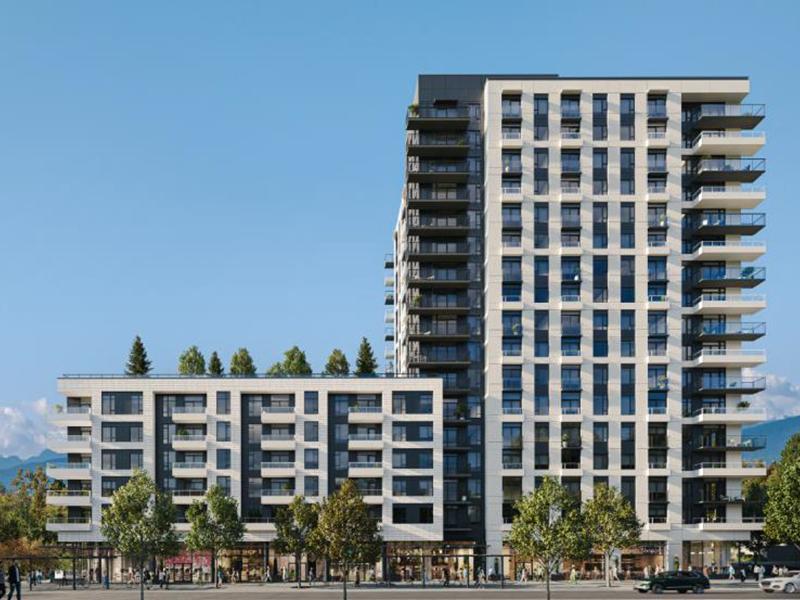
Harrison Street is building a 458-bed rental building near SFU called Symposia in partnership with local developer Mosaic. It's expected to be completed in 2028, in time for the start of the academic year.
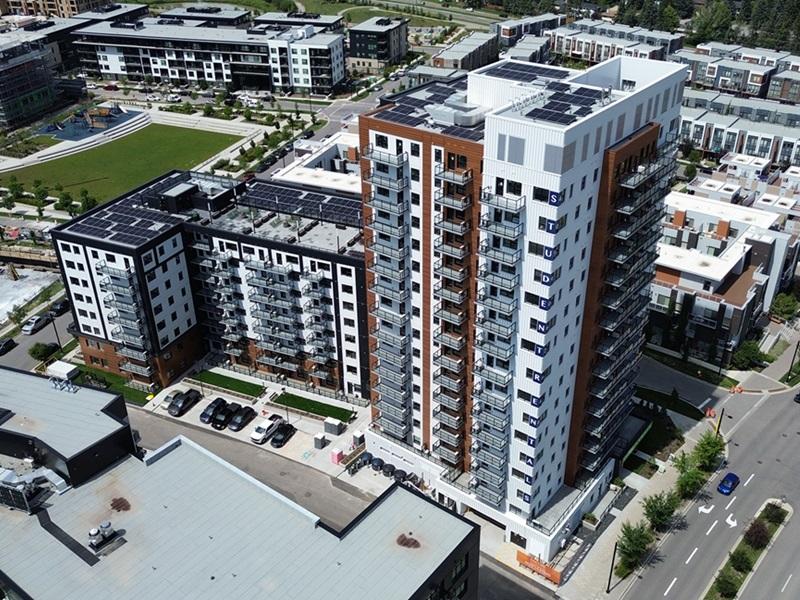
The company's first project near SFU, Koto, is a 283-bed rental building. Once both Koto and Symposia are completed, Harrison Street’s portfolio in SFU’s UniverCity neighbourhood will grow to nearly 750 beds and include the only two purpose-built student accommodations on the mountain next to the campus.
Harrison Street, through its Canadian Alternative Real Estate Fund, is one of the largest owners of private, off-campus student accommodation in Canada. The company launched the fund five years ago and have built a portfolio of approximately 4,500 beds.
More purpose-built student housing needed, EY Canada agrees
Despite the federal cap on international student visas, the student housing market continues to face significant rental supply shortages, according to research by EY Canada.
In 2023, on-campus residence buildings and privately owned off-campus buildings provided accommodation for only 16 per cent of total student enrolment, with an all-time low average vacancy rate of 1.5 per cent, according to EY's 2025 report.
Citing Forum REIIF estimates, EY Canada suggested that 400,000 purpose-built student beds would be needed in the next six years. That's because 1.5 million students will be competing for just 170,000 purpose-built beds for students at and around Canada’s 20 largest university markets.
Globally, Harrison Street has about 240,000 student beds across hundreds of universities.
Gordon said their long-term student housing view points to higher yields than traditional multifamily housing; more tenant turnover to allow for quicker rent escalation; and strong demand for new, well-located and amenitized buildings near the country's top 20 schools.
Harrison Street identifies investments based on several factors including enrolment history, applications, admissions, the domestic and the international composition and the academic reputation of a school.
"Then we map the entire housing ecosystem around it, so university-owned beds, purpose-built beds, conventional, rental alternatives," he said. "We look at rents, occupancy, future supply, land availability, barriers to entry, proximity, all that kind of stuff."
A major key is being close to campus, he added.


 Industry Events
 Locations