Locations



A shift in market gravity
The influx of receivership mandates isn't just a byproduct of high interest rates; it’s the result of a "perfect storm" of development pressures that have left little room for error. A parallel narrative is unfolding across Canada’s two most expensive markets, Ontario and British Columbia.
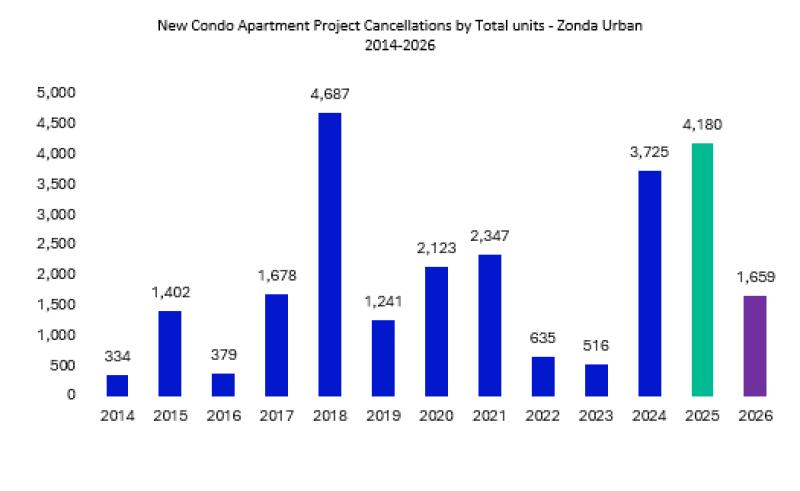
This trend is expected to intensify through 2026. For opportunistic investors, this shift signals a rare window to acquire high-quality, de risked assets as the market recalibrates.
In Ontario, recent announcements to slash development cost charges (DCCs) by 50% aim to spur housing. Yet for many, these interventions arrived too late, leaving projects caught between peak land prices and current financing costs.
"We are seeing a variety of asset classes enter the court process, but 80% are development land," notes Jeremiah Shamess, Executive Vice President and head of the Private Capital Investment Group in Toronto. "From stalled development sites to value add apartment buildings, these aren't simple transactions. They are typically a failed property, so we must act like the developer or investor and find the best path to a closing while driving the highest price.”
Shamess, who recently closed an $11.2 million receivership sale on Dundas Street West, says his team receives two to three calls a week from lenders pre-emptively seeking solutions and values. " Many of these properties are in a challenging position, and you're often having to solve a puzzle to find the best way to present the site to the market. The key is delivering a better future for the property."
The transparency paradox: Why public exposure wins
To satisfy the court and ensure a sale is approved, there must be a clear, documented effort to expose the asset to the widest possible audience. It’s the most effective way to maximize recovery for investors and lenders.
"Our role is to create a market where one might not seemingly exist," says Casey Weeks, Executive Vice President at Colliers and part of the Iannone and Weeks Investment and Land Sales Group in Metro Vancouver. "By leveraging Colliers’ massive distribution network, we ensure that every potential suitor—from institutional funds to private value-add players—are at the table. That competition is exactly what the Receiver and the Court need to see to ensure the highest recovery possible."
Experience by the numbers
Court-ordered sales demand a level of precision and exposure that goes far beyond a conventional disposition. Under the scrutiny of the Court, every file must demonstrate a transparent, well-documented effort to reach the widest possible buyer pool. That’s where experience and platform matter.
Leveraging Colliers’ national marketing infrastructure and our ability to drive full market exposure across institutional, private, and international capital, the team ensures that every distressed asset receives the competitive tension required to support maximum recovery.
Since 2021, the Vancouver-based team of Morgan Iannone and Casey Weeks, has completed more than $990 million in total sales across Metro Vancouver and Victoria, including $165 million in distressed and court-supervised transactions. Their experience spans residential development land, income-producing assets, and complex multi-party restructurings, giving them a depth of insight that few brokerage groups can match.
In Toronto and Hamilton, Shamess has closed $1.38 billion in sales in that same period, with $283 million involving distressed or court ordered transactions. Most of these transactions have had a construction component that remains uncompleted, even the heavy value-add apartment buildings and retail buildings.
"Receiverships require you to think in two dimensions at once," says Iannone. "You’re executing a highly disciplined marketing process, but you’re also navigating a legal framework that allows no room for missteps. Knowing how those two tracks intersect and how to keep them aligned is what ultimately protects value."
Finding uncommon solutions
The goal for Iannone, Weeks, and Shamess isn't just to list a property, but to engineer a recovery by focusing on finding uncommon solutions to return capital to stakeholders. Their track record translates directly into better outcomes for stakeholders.
As more files are set to enter the court system this year, having a team that understands the cadence of reporting, the expectations of the Court, and the mindset of buyers in distressed environments allows for clearer risk assessment, stronger buyer qualification, and a more predictable path to recovery.
Looking ahead
As we move through 2026, the trend of receiverships is likely to persist as the market recalibrates. The difference between a successful exit and a total loss often comes down to the team’s ability to manage the court process with the same intensity as the marketing.
In a market defined by complexity, the most valuable asset isn't just the real estate— it’s the expertise required to sell it.


 Industry Events
 Locations