
 Locations
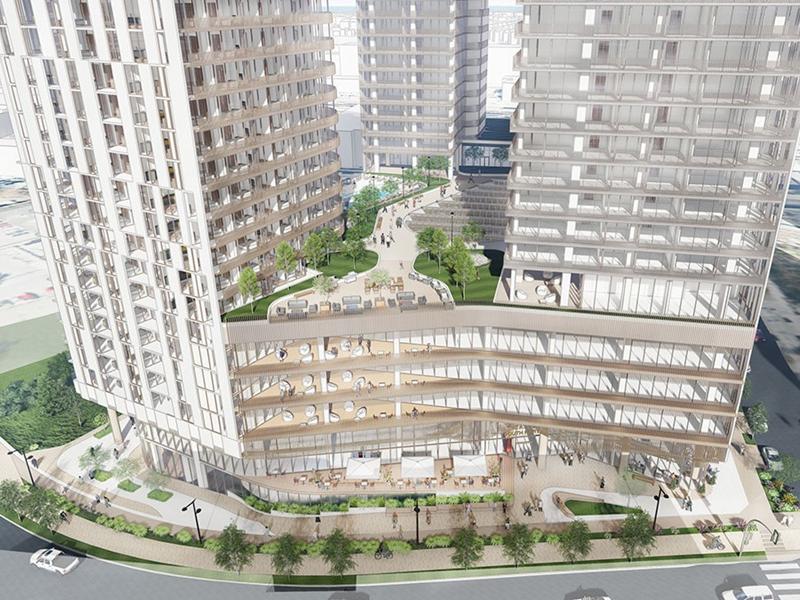
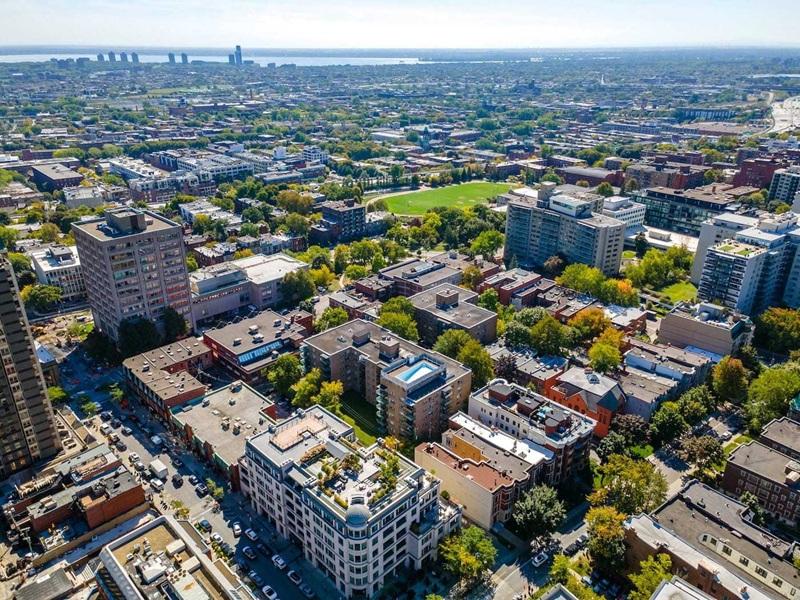





With high construction costs limiting new construction starts in Toronto and Vancouver, combined with growing expectations from retail, office and residential for environments that better support the conveniences of daily life, developers are looking for new ways to strengthen real estate performance.
Surprisingly, some of the strongest lessons for placemaking this year did not come from the flagship mixed-use projects we normally analyze. They came from airports, medical districts and long-standing community anchors.
These environments were not created to intentionally showcase placemaking. Yet they reveal how strongly behaviour responds to daily comforts and predictability. They show how small routine experiences influence dwell time, repeat visits and long-term demand. In a market where performance is increasingly tied to perception and simple day-to-day usability, the return feels exponential.
When people understand a site without effort, when circulation feels intuitive, when stressful moments are easier to navigate, behaviour changes. The experience becomes part of the asset’s value.
Notably, many of these experiences are taking place in the in-between spaces - between a street entrance and the building itself - where people pause, adjust or quietly assess their surroundings. This demonstrates to us how placemaking can also be effective with a series of smaller, consistent touch points and does not always have to be a large key gesture.
Some notable examples follow.
Medical districts and the architecture of care
Chicago’s Illinois Medical District shows how even highly specialized environments are rethinking the experience of daily movement. The district recently broke ground on its first new park in 80 years, adding a green space, walking paths, seating and areas designed for quiet rest.
What was once a purely institutional landscape is starting to function as a public realm.
A similar direction is visible in Toronto. SickKids, which was recently ranked the world’s best children’s hospital by Newsweek and Statista, is advancing a long-term redevelopment vision that places patient and family experience at the forefront. Improvements to accessibility, circulation, comfort and public-facing areas are being integrated as essential infrastructure.
These settings are built around vulnerability and complex moments, yet they highlight something relevant for every developer. People respond strongly to environments that reduce friction and help them navigate uncertainty with more ease.
When an environment is designed to lower stress during a difficult visit, it performs even better during an ordinary one. That is where attachment, positive sentiment and repeat behaviour begin to form.
Airports and the experience economy of movement
Airports made this especially clear. Through our work at Dallas Fort Worth airport on public art, media strategy and production, and through conversations with airport teams across North America, we saw how much attention is now being placed on the in-between moments of travel.
The strongest moves were not large iconic installations. They were the small, intentional touches that shape orientation, comfort and emotional clarity.
The redevelopment of the new Salt Lake City Airport illustrates this shift well. One of its most talked-about features is a passage known as the River Tunnel. It combines immersive lighting, locally inspired art and a curated soundscape to make a long transition feel calm and intuitive rather than stressful.
It is a circulation space, yet it behaves like a place. People register it immediately, and it changes how they feel before they reach a gate, a shop or a restaurant.
It influences the first minutes on site, which has direct impact on dwell time, comfort levels and non-aeronautical revenue, which has become a growing focus for airport business models.
For Canadian mixed-use and retail developments, the impact we see is similar. The arrival sequence and the quality of the in-between spaces not only influences brand perception it also contributes to positive financial performance.
What developers can take into 2026
Across these examples, the same idea keeps returning. Developments that resonate with community and visitors do not rely on one bold move.
What works is the combination of clear anchors and a coherent sequence of everyday experiences. The quiet spaces matter as much as the signature ones. The way a site functions on a weekday morning in winter matters as much as opening day.
The street-to-seat journey influences how people feel about the entire environment.
Designing connective tissue with as much intention as the destination
Increasingly we are seeing the most successful destinations and places are the ones that behave like systems of experience: anchored by the major elements, reinforced by the everyday routines, and made coherent through the in-between spaces that support how people move, pause and gather.
That continuity strengthens identity, builds trust and supports leasing, tenant renewal and long-term demand.
In practice, this means treating placemaking as part of the asset plan, not a seasonal layer or a decorative add-on. It means planning for an ordinary weekday instead of only planning for launch day. Designing in-between spaces intentionally as landmarks.
It also means measuring small behavioural signals such as dwell time, repeat visits and sentiment, not only footfall or occupancy. This work often begins earlier than expected. Early gestures help people build familiarity with a site before construction is complete, and the tone they set tends to last.
As we look to the development landscape for 2026, there is immense opportunity is to build with continuity in mind. A framework that supports comfort, clarity and connection throughout the day.
If you travel this winter season, pay attention to the small moments that make you feel at ease.
The transitions. The quiet corners. The places that invite a brief pause or a natural encounter.
These are the moments that signal where development will be heading next.



 Industry Events
 Locations