
 Locations







As Canada's health-care system struggles under the pressure of an aging population and growing funding demands, a shift is reshaping the sector's commercial real estate landscape. Medical office buildings are drawing serious attention from investors, developers and health-care providers alike.
MPAC data for Ontario shows medical and dental properties have accounted for over 20 per cent of new office buildings during the past 16 years, compared to a historical average of 12 per cent.
That trend extends westward. According to CIHI, real per capita health-care spending in B.C. grew faster than the national average between 2022 and 2024.
The drivers for in-person services are hard to ignore: wait times are growing; family physicians are increasingly scarce; hospital systems are stretched; and governments have not filled the gaps with public capital. Into that vacuum, privately owned medical office real estate is stepping forward.
"We already have a shortage of medical and health-care servicing to the current population," Raman Bayanzadeh, principal of CRE investment and development at Royal LePage Sussex, told RENX in an interview. "So we're even more behind for the future."
Long-term, stable tenants
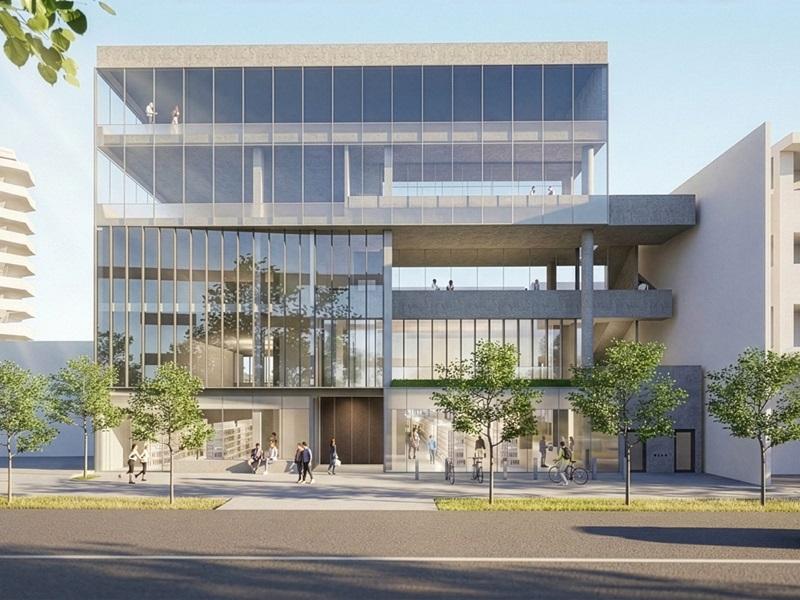
Bayanzadeh, who is currently marketing Cascadia, a purpose-built medical office presale project in North Vancouver, notes the fundamentals are unusually strong. Population is growing, demographics are aging sharply and governments lack the capital to build their way out of the problem. The result, he argues, is a near-perfect setup for private medical real estate.
What makes the sector particularly attractive to investors is how medical tenants behave once they're in. They invest heavily in their spaces — think plumbing, electrical upgrades, specialized ventilation — and they stay.
"Those tenants end up spending a significant amount of money improving that space," Bayanzadeh confirmed. "They're not going anywhere. They need to stay there for 10 to 20 years for that to make sense."
That long-term stability is something Kate Camenzuli, vice-president of retail at CBRE, sees consistently across her real estate practice, which sits at the intersection of retail and health care.
"These tend to be long-term clients," she said, "because there's heavy build-out. And they stay, running a practice for 20 or 30 years."
The consumer-facing shift
Camenzuli is careful to reframe how the industry thinks about medical in retail or office contexts. The shift, she said, isn't simply about health-care providers moving into shopping centres. It's a fundamental rethinking of the patient experience, bringing together curated mixes of complementary services in accessible, well-located spaces.
She compared it to retail merchandising.
"It's the approachability for patients. What does that look like? What do they want?" Camenzuli observed. "They're being more thoughtful… like having a cardiologist on the 21st floor when an elevator breaks is not super novel."
The demand, she argued, is being driven not just by private equity roll-ups consolidating dental and medi-spa chains, but also by a demographic reality: disease is appearing in younger populations; fertility challenges are rising; and the sandwich generation — adults caring for aging parents and young children simultaneously — is pushing for convenience.
Bayanzadeh agreed: "You create a hub of services in one convenient place for the community." That efficiency, he added, creates less patient leakage, which is a perk for clients.
A reliable, financially stable buyer pool
On the development side, Geoff Duyker, senior vice-president at Mosaic Homes, said medical and medical-adjacent users have become among the most reliable buyers of mixed-use commercial space in the company's B.C. Lower Mainland projects.
At Moody Yards, a city block redevelopment in Port Moody, six of nine sold commercial units went to medical or medical-adjacent businesses. Duyker attributed that to a straightforward financial reality.
"Medical services is a profitable business," he said, "and because there's so much certainty around (its) success, lenders are very happy to lend them lots of money at a very low cost."
He also noted medical users tend to show up early in the sales cycle, often before a project goes to market, which he doesn't see from other user types. "They know where they want to be, and they're looking for high-quality space, which is often hard to come by," he said.
One factor underpinning the entire sector is financing. Both Bayanzadeh and Camenzuli independently noted that practitioners routinely qualify for up to 100 per cent financing on commercial real estate purchases — something banks like CIBC and National Bank confirm on their websites. It's a level of institutional support rarely extended to other sectors.
"I wouldn't be surprised to see many more doctors buying or partnering with office landlords to buy buildings, because it's a very stable business. If you can convert thoughtfully, there's much less risk than from a random person," Camenzuli added.
That preferential lending creates a pool of motivated and financially capable buyers, which in turn gives developers and investors confidence that demand will hold.
Why purpose-built?
Bayanzadeh is also seeing the emergence of purpose-built medical buildings as the clear superior alternative to retrofitting conventional office or retail space. He notes medical users often require specific plumbing, power capacity, ceiling heights and, in some cases, significant load-bearing capacity for imaging equipment.
Trying to adapt a generic office floor to those needs is expensive and time-consuming. A building designed from the ground up for medical use solves most of those problems before a tenant ever signs a lease.
The risks
The risks, where they exist, are manageable. Bayanzadeh pointed to the possibility of oversupply if the trend draws too many developers too quickly. Duyker flagged rising interest rates as a headwind for buyers. Camenzuli noted that some older medical office landlords have historically underinvested in capital expenditures, leaving their buildings increasingly uncompetitive.
But the consensus among all three is the sector's fundamentals remain sound, and Canada is likely still in the early stages of what could become a significant reorientation of health-care delivery toward community-based, privately owned hubs.
"This is the beginning, or the continuation and growth, of a very interesting sector," Camenzuli, who foresees more sector institutionalization, predicted. "For real estate people, thoughtfully thinking through health and wellness as they build a portfolio is very important — and for a long-term play, very interesting."



 Industry Events
 Locations