Locations




Nearly two years ago, leadership at Townline set a plan to maintain its pipeline of development projects amidst a period of challenging market and economic conditions in British Columbia.
The goal in 2024 was to construct a variety of housing types at its active projects, backed by what its president said was the right mix of strategy, efficiency and optimism within a market that was seeing slower pre-sales and projects that were stalled, changed or cancelled.
So, how have things evolved as we enter 2026? Townline president Daryl Simpson reflected on the then, and now, in an interview with RENX.
"In many respects, it feels like we've been frozen in time a little bit," he said.
Fragile housing market conditions persist, mainly due to a still-sluggish pre-sale condo market and continued macroeconomic uncertainty. There seem to be fresh trade and political curve balls daily that are impacting Canada.
Simpson said the metrics Vancouver-based Townline uses to make informed decisions as a developer haven’t changed, but the conditions around them have perhaps grown worse over the past couple of years. For developers to start projects, they need to sense that rents will move up and housing units will be purchased at prices that surpass construction and carrying costs.
"You're generally relying on a modest increase in value over time," Simpson said.
While conditions remain tough, Simpson and his team is not remaining idle and have made changes to their process and business streams to keep moving forward.
Townline maintaining liquidity and project pipeline
One adjustment Townline has made is to become even more active in the non-market housing space, working with BC Housing, BC Builds and Build Canada Homes.
"There are lots of proposals (we have) out the door with BC Housing," Simpson said. "We've won a couple of proposals in the last three months, which is encouraging, and that allows us to be present in the non-market side of the housing spectrum — and we're going to continue to do that."
Townline has also focused on providing third-party construction support for other developers. Those projects are helping to keep the building team employed and activated.
"That is a hedge and defensive mechanism against the development market, which is really challenging right now," Simpson said. "We expect to start two (third-party construction) projects this year."
Townline also continues to propose and build new housing projects, including condo and rental.
Townline's current developments
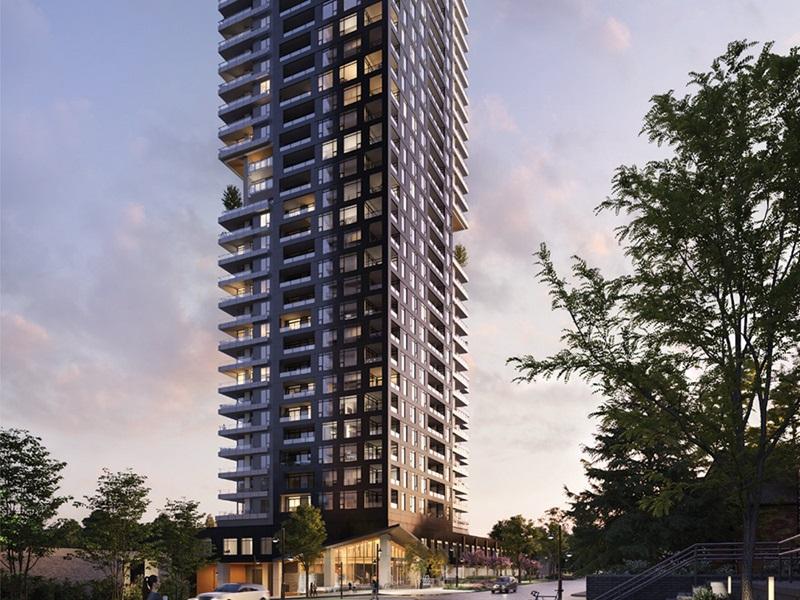
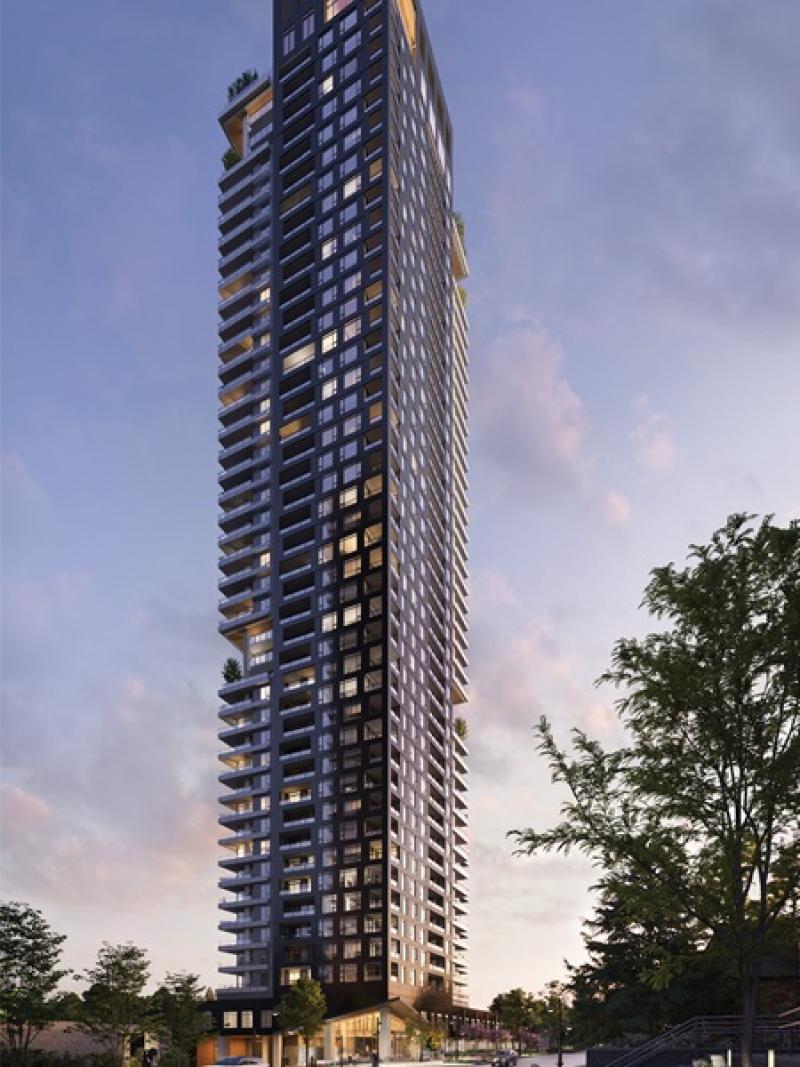
Among those projects is BAND, a 45-storey condo tower in Coquitlam being developed in partnership with QuadReal. Construction continues at BAND and residents are to start moving into the building in January 2027.
There is also Terrayne — a project on Burke Mountain in Coquitlam with a mix of townhomes and garden flats.

In Victoria, Townline recently finished Neighbour (formerly called Pandora).
"It's the first of its kind in Canada. It's a hybrid rental building and co-live,” Simpson said. “We have about 150 co-live (units) in that building. It operates a little bit like short-term furnished rental, and cohabitated housing."
Designed as a home to be shared by roommates, each bedroom provides tenants the flexibility of a Murphy-bed to provide extra space for activities or socializing.
Meantime, leasing is approaching completion on Meridian, a 37-storey rental tower in Burquitlam with 262 homes in a joint venture with Nicola Wealth Real Estate. The building is about 75 per cent leased.
"That building's going great," Simpson said. "That's a shining star for us."
Townline has also been providing development consulting services, a new branch that didn't exist for it two years ago.
"It's a way of pivoting and providing value to other groups," Simpson said, noting it provides expert support for other landowners, namely the Musqueam Capital Corporation and Nch’Kay Development Corporation.
"You wouldn't have found large companies like ourselves doing that kind of work before, but we have capacity; we have very talented teams; and we're deploying them as a resource for other groups now, which is a pivot."
Flight to quality in local housing market
Simpson sees a flight to quality taking place. "People can buy a little bit more space, they can take a little bit more time, they can get exactly what they want, and so buyers are being more scrutinizing and scrupulous in terms of their wants and needs."
The market is shifting away from homes designed for investors.
“A lot of the inventory that's lagging around right now is product that would have been in the hands of an investor and would have been a rental apartment,” Simpson said. “That's now sitting around a little bit longer because homeowners, who are the only homebuyers active… right now, are looking past that."
Ultimately, for most housing projects to move forward, developers rely on investors buying some of the units. "We need investors back in the market to be buying up some of this inventory and putting those units back into the rental pool, because right now, they're just sitting unoccupied."
Pre-sales are the best “proxy” for a market’s collective view of the future.
"Do I believe that prices will be significantly higher in four years now? Yeah, absolutely, but the marketplace doesn't necessarily believe that."


 Industry Events
 Locations